GIZA · EGYPT

Furniture with a clear purpose and a visible hand.

Made-to-measure tables, storage and interior joinery produced in a small Giza workshop.

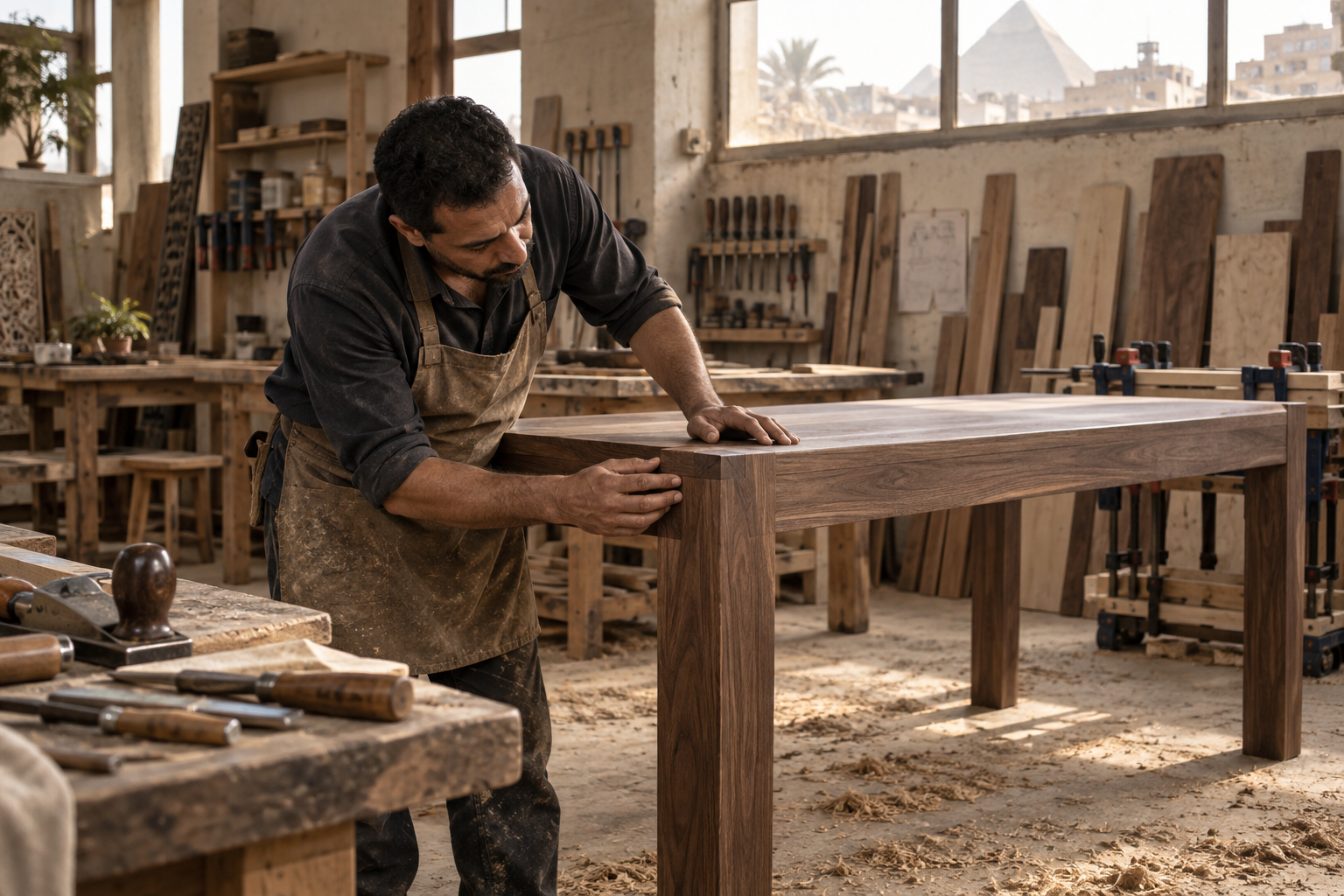
Carpenter working in a Cairo workshop
Workshop note 08 / solid timber
MEASURE TWICE

We make fewer pieces, take dimensions seriously and choose joints that can be maintained over time.

From the workshop

See the collection
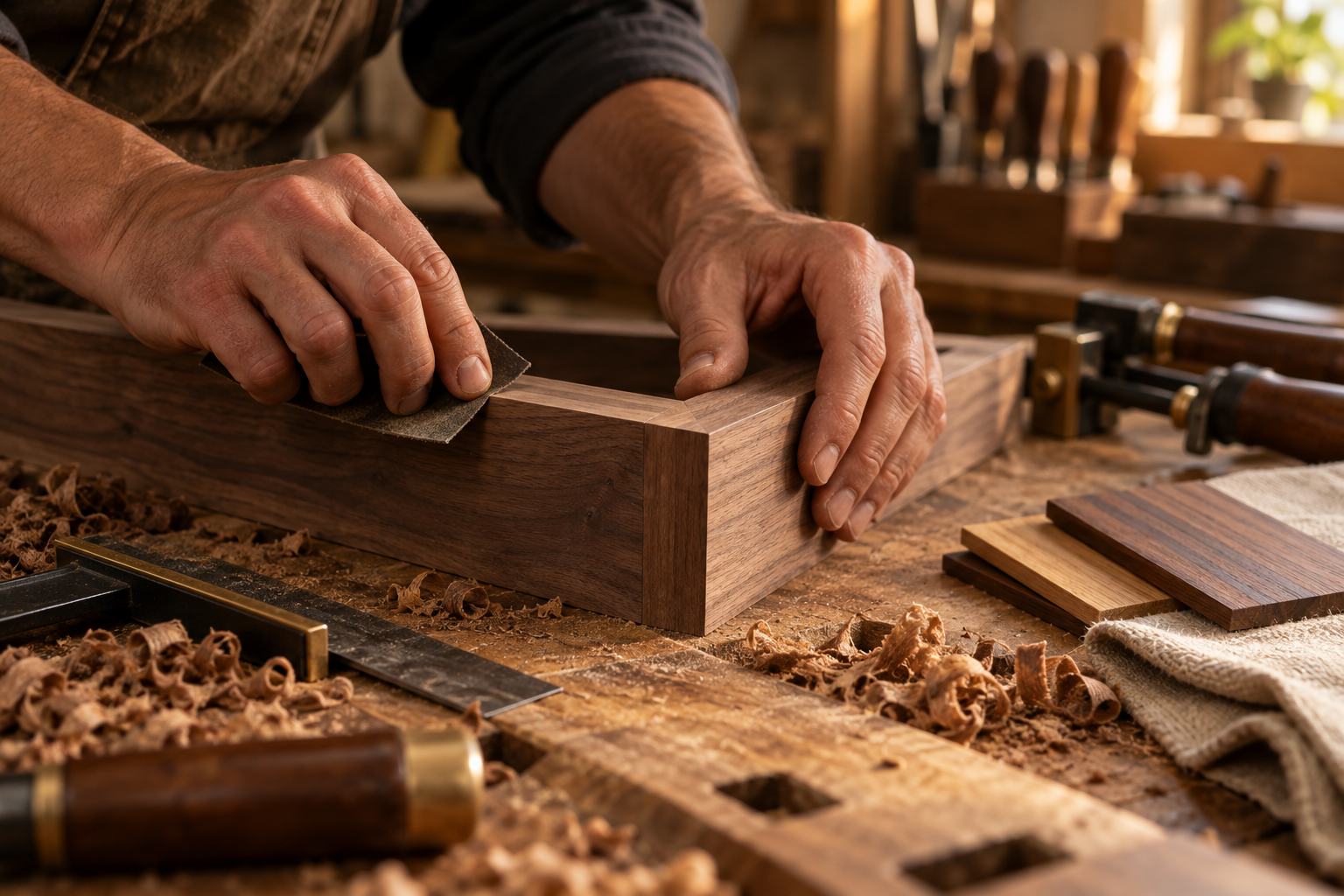
Craftsperson sanding timber
Surface and finish

Quiet materials,
useful proportions.

Every commission begins with how the piece should work in its room.

Lead time is confirmed after the drawing, material and site conditions are understood. Timber selection, machining, assembly and finish each need their own pace, and fitted work may depend on access to a room still being completed. The schedule therefore includes approval points instead of presenting one unexplained delivery date.

Care advice is specific to the selected surface. Clients are shown how to remove ordinary dust, respond to a spill and avoid concentrated heat or moisture. If a mark or loose fitting develops later, photographs and the original commission record help the workshop recommend an appropriate repair.

The final commission record retains approved dimensions, materials and hardware references. If the room changes later, that information gives the workshop a reliable basis for adapting, extending or assessing the original piece.

Commission a piece →
Carpenter shaping wooden frames
Joinery and assembly
A COMMISSION, STEP BY STEP

The drawing carries the conversation into the workshop.

Begin with the room

We ask for dimensions, photographs and a short description of what the piece must hold or support. Circulation matters as much as width: dining chairs need space to move, cabinet doors need a clear opening path and shelves should remain comfortable to reach. A site visit in Giza or Greater Cairo is arranged when walls, floors or existing joinery need to be measured directly.

Resolve proportion

The first drawing sets overall length, height and depth before decorative decisions. We look at adjacent doors, window lines and the scale of other furniture. For tables, we check seating count, leg position and comfortable knee space. For storage, we divide closed, open and frequently accessed areas according to real belongings rather than a catalogue photograph.

Approve materials

Timber species, veneer direction, handles, hinges and finish samples are recorded with the drawing. Natural boards vary, so grain and colour are reviewed as a family instead of promising identical pieces. Where solid timber movement matters, the construction allows seasonal change without forcing the material flat.

Repairable does not mean indestructible. It means the construction can be understood and reached. Hinges can be adjusted, shelves can be removed, surfaces can be refreshed and a damaged component can often be replaced without discarding the entire object. We prefer mechanical fixings where future access matters and durable joints where the structure should remain permanent.

Edges receive attention because they show wear first. Table tops are eased for a comfortable touch, doors are aligned under their own weight and drawers are tested when loaded. The finish is selected for the intended use: a family dining table has different needs from display shelving or a low cabinet in a quiet sitting room.

During production, dimensions are checked at cutting, assembly and dry-fit stages. The client is contacted if site conditions or material behaviour require a meaningful change. We do not hide those decisions behind the phrase “handmade”; the aim is controlled craft, not unpredictability.

DELIVERY AND INSTALLATION

The last measurement is the route into the room.

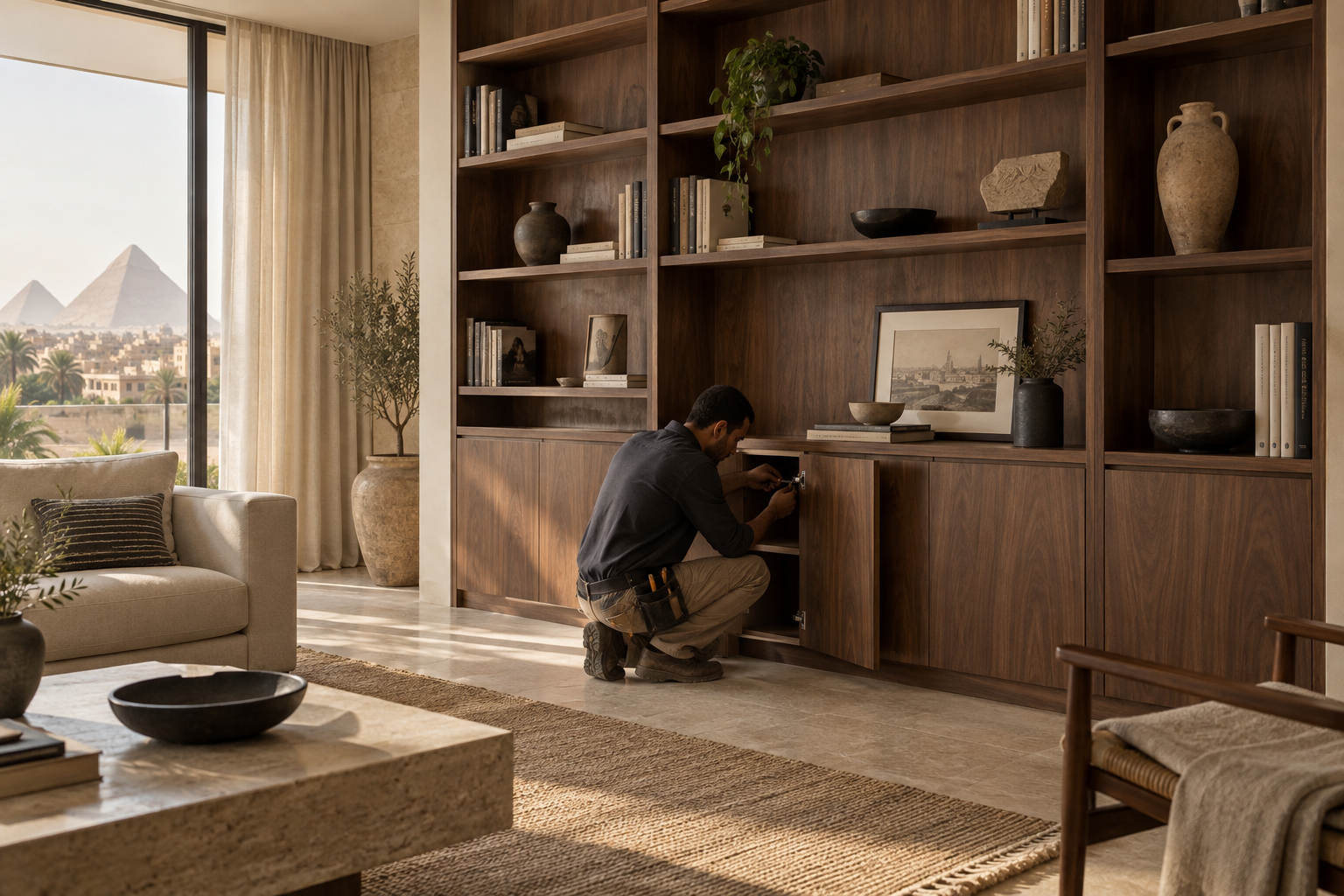
Before delivery we confirm stairs, lift dimensions, parking access and the final position of the piece. Large commissions may travel in planned modules and be assembled on site. Floors and nearby finishes are protected, doors and drawers are adjusted after installation, and the client receives straightforward notes for cleaning and future care.

For fitted work, walls are rarely perfectly square. Scribes, shadow gaps and removable panels are planned so the finished joinery belongs to the room without trapping services or creating awkward seams. We complete a final review in daylight wherever possible, when grain, alignment and surface marks are easiest to see.

Xisibo Joinery accepts a limited number of commissions at a time. That keeps communication close to the people making the work and gives timber, finish and assembly the time they require. Enquiries are welcome for dining tables, benches, shelving and fitted storage in Giza and neighbouring Cairo districts.

Plan a made-to-measure piece
01
Room and access measurements
02
Approved drawing and material sample
03
Workshop build and dry fit
04
Protected delivery and adjustment